
Our Matcha
Our Matcha – Types and Their Specifics
Every Kyosun matcha has its story and purpose. From the kitchen and gastronomy to the tea ceremony – choose matcha directly from Japan with guaranteed origin, organic certification, and regular lab testing.
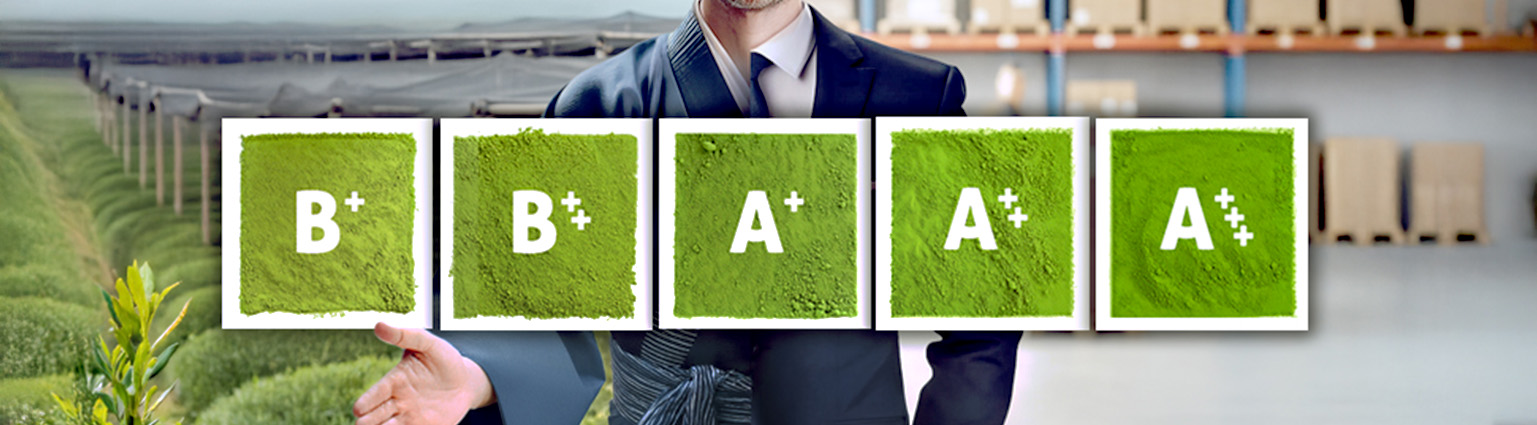
Kyosun Matcha B⁺
Pronounced taste with light astringency and light green color. Higher catechin content – ideal for intense color and flavor in desserts, drinks, and culinary formulas.
- Sweetness *
- Umami *
- Astringency ****
- Color intensity *
Kyosun Matcha B⁺⁺
Delicate with a hint of astringency and a more pronounced green tone. More amino acids than B⁺ – often chosen for the best price/performance ratio.
- Sweetness **
- Umami **
- Astringency ***
- Color intensity **
Kyosun Matcha A⁺
Smooth, harmonious taste without astringency and beautifully intense color. High L-theanine content supports focus and delivers calm energy.
- Sweetness ***
- Umami ***
- Astringency **
- Color intensity ****
Kyosun Matcha A⁺⁺
Even smoother and fuller than A⁺. Velvety texture and sweet finish – outstanding quality, near-ceremonial.
- Sweetness ****
- Umami ****
- Astringency *
- Color intensity ****
Kyosun Matcha A⁺⁺⁺
The highest grade in our portfolio: delicate, slightly sweet taste, deep green color, and velvety texture. Ideal for traditional preparation (usucha, koicha) and exclusive concepts.
- Sweetness ******
- Umami ******
- Astringency *
- Color intensity ******
Quick Comparison
| Type | Origin / harvest | Certification | Brief profile | Best for |
|---|---|---|---|---|
| B⁺ | Shizuoka (3rd) | Organic | pronounced, lightly astringent | gastronomy, desserts, production |
| B⁺⁺ | Aichi + Shizuoka (1st & 2nd) | Organic, kosher | delicate with a hint of astringency | daily drinking, recipes |
| A⁺ | Aichi (1st) | Organic, kosher | harmonious, no astringency | straight prep, latte |
| A⁺⁺ | Aichi (1st) | Organic, kosher | velvety, sweeter | rituals, premium lattes |
| A⁺⁺⁺ | Kagoshima (1st) | Organic, kosher | ultimate delicacy | usucha/koicha, fine dining |
Frequently Asked Questions
Which matcha is best for lattes?
For everyday lattes, choose B⁺⁺ (balanced color and taste). For premium drinks, go with A⁺ or A⁺⁺ – a velvety profile with pronounced umami.
What's the difference between 1st, 2nd, and 3rd harvest?
1st harvest (first spring leaves) – the most delicate taste, higher L-theanine. 2nd harvest – fuller flavor, still gentle. 3rd harvest – more pronounced profile and higher catechins, great for gastronomy and production.
How should I store matcha after opening?
Airtight, chilled, and away from light. After opening, ideally consume within a few weeks to preserve full aroma.